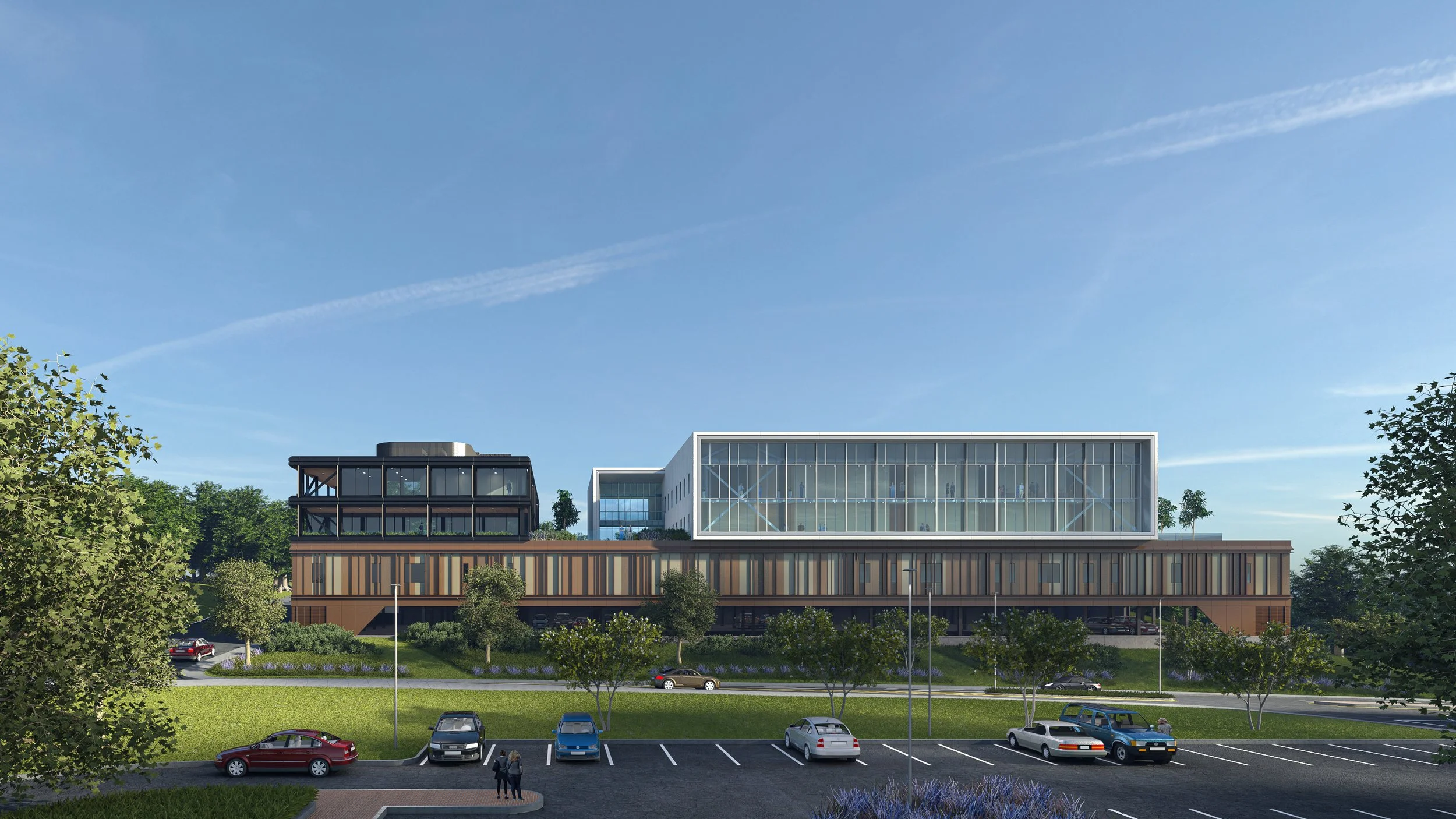
71 Border Road Medical Office Building
Description
The Boston Bone & Joint Institute sought to create a new clinical facility—envisioned as a modern ambulatory outpatient center that would exemplify how healthcare architecture could serve patients, clinicians, and the broader community while demonstrating a commitment to environmental stewardship. The challenge was to design a building that balanced the demanding clinical program with genuine sustainability, creating spaces that promoted healing while reducing environmental impact.
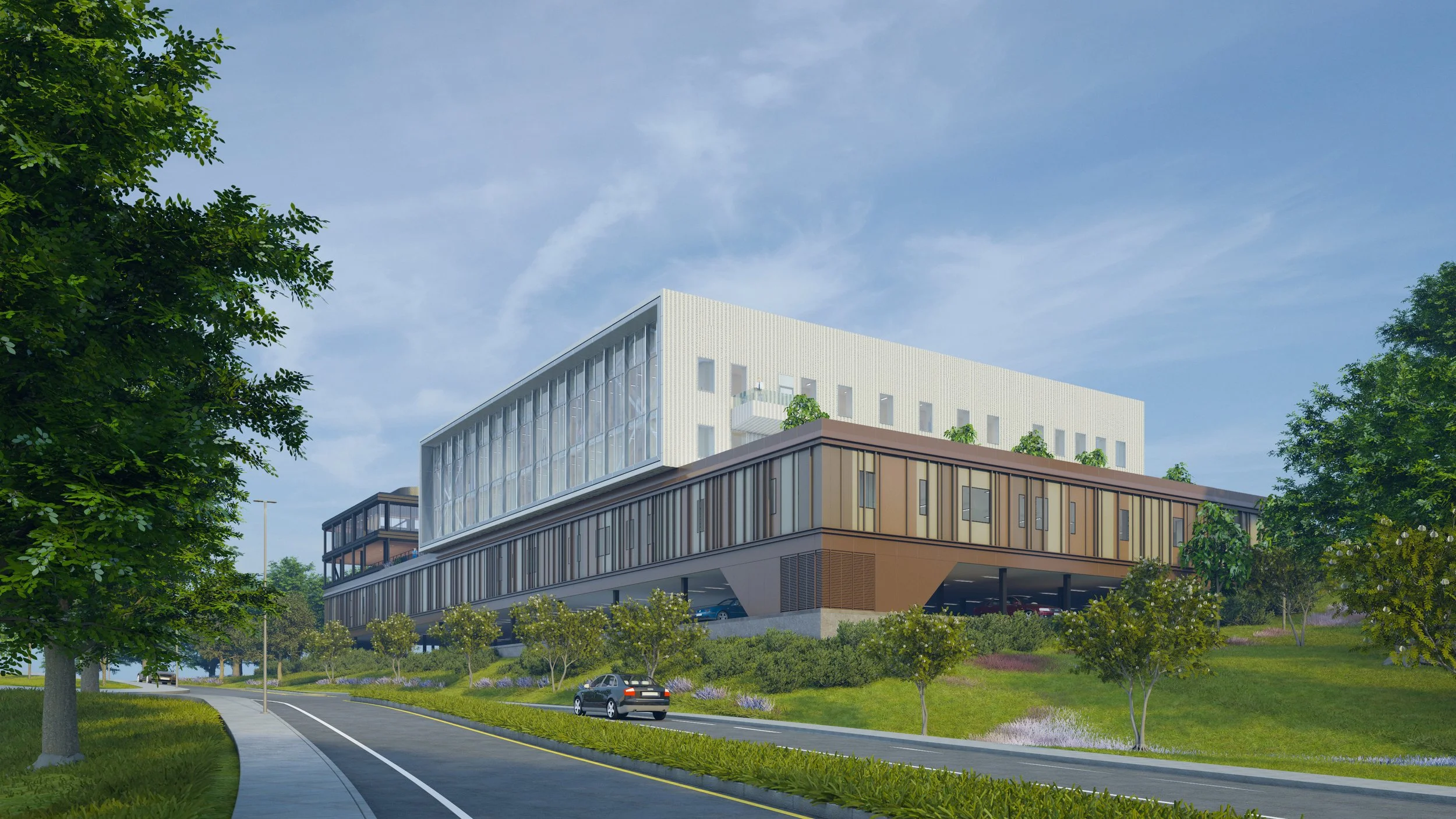
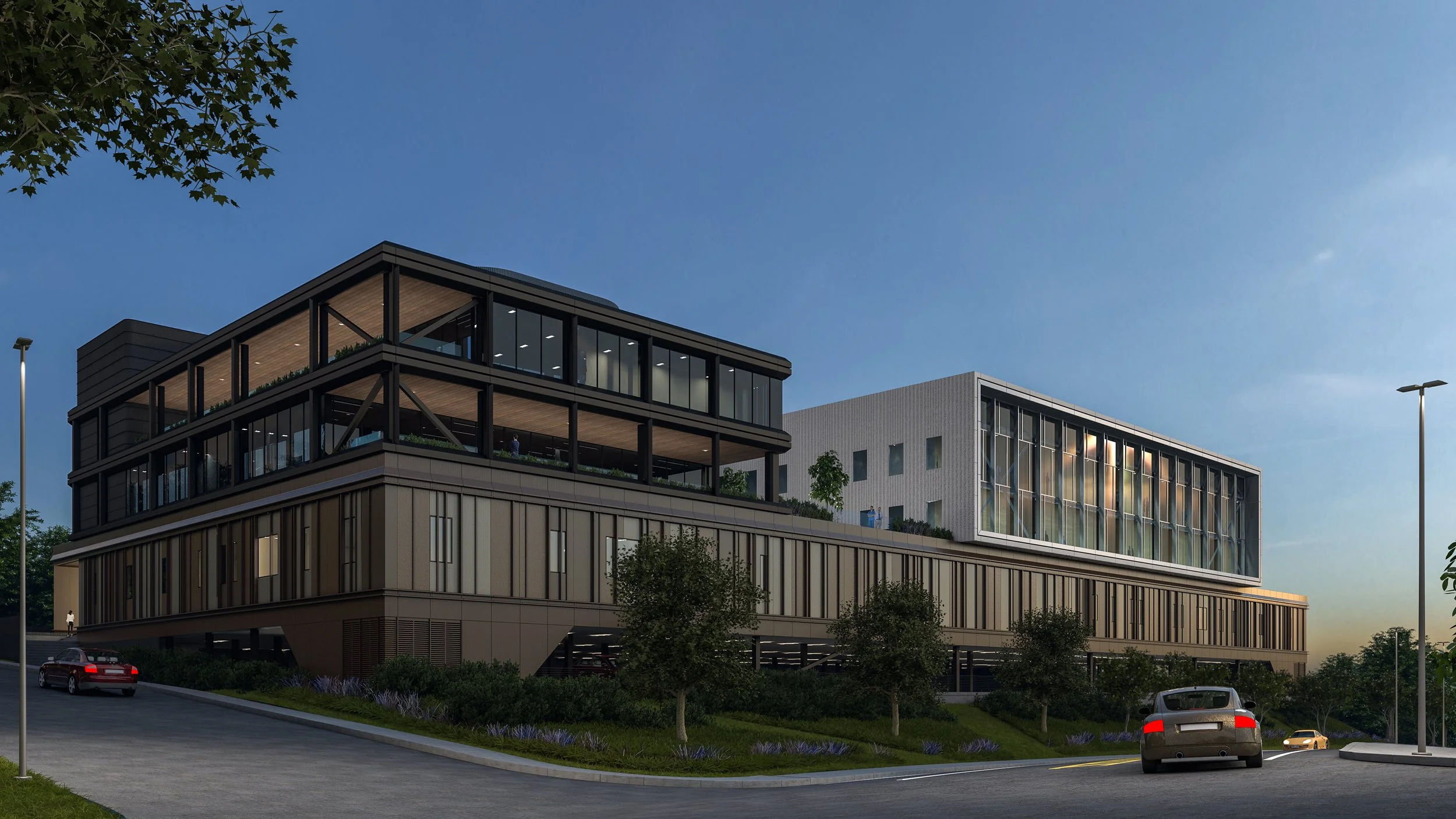
Machado Silvetti approached the core and shell design at 71 Border Road as an opportunity to embed sustainability into the building's fundamental structure and form, rather than treating it as an afterthought. Every decision—from site planning to material selection to structural expression—was guided by a commitment to reduce environmental impact while increasing operational efficiency and long-term cost-effectiveness.
71 Border Road demonstrates that ambulatory healthcare facilities need not compromise environmental responsibility for clinical excellence. Through careful core and shell design, Machado Silvetti created a platform for design partner Cube 3's interior and clinical spaces to plug in—this vision of responsible, forward-thinking healthcare architecture is not only possible, but essential.
Site Density and Thermal Performance
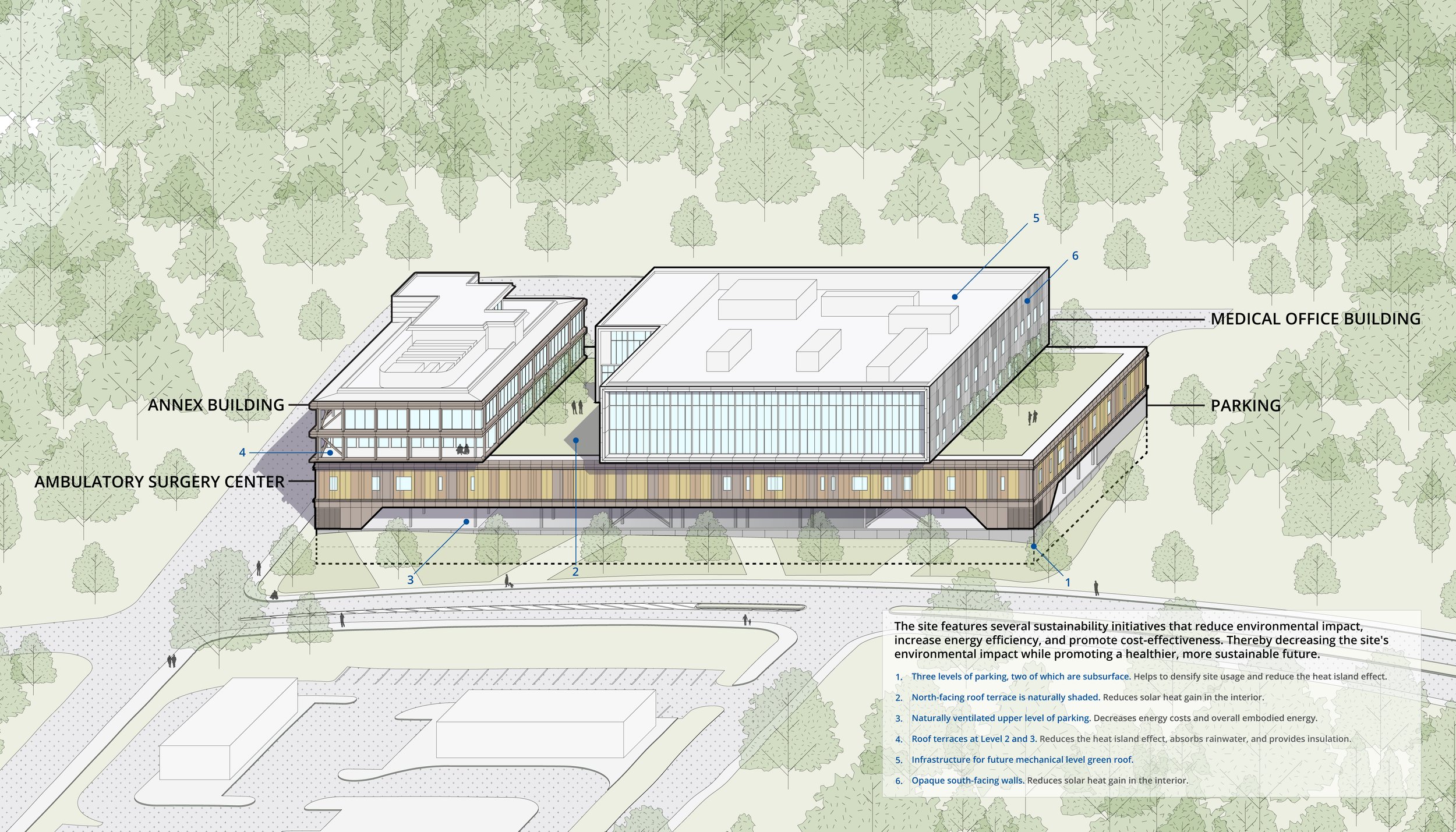
The design densifies the site through three levels of parking, with two subsurface, significantly reducing the building's thermal footprint and mitigating heat island effect. This strategic approach preserves open space while accommodating necessary program requirements. The naturally ventilated upper level of parking decreases energy costs and embodied energy, avoiding mechanical systems where natural air movement proves sufficient.
Rooftop Strategy
The north-facing roof terrace is naturally shaded to reduce solar gain, while south-facing walls remain intentionally opaque to prevent interior heat gain. Second and third-level roof terraces serve multiple functions: they reduce heat island effect, absorb rainwater to manage stormwater runoff, and increase thermal insulation. Infrastructure for a future mechanical level green roof was incorporated into the structural design, allowing the building to evolve as sustainability standards advance.
Material Expression
These sustainability strategies are not hidden—they are expressed honestly in the building's form and materiality. The structural logic becomes visible in the facade, where opaque southern walls and strategically shaded northern terraces communicate the building's environmental philosophy. This honest expression of function creates a building that educates occupants about sustainable design principles simply through occupation.
Details
Commercial
Waltham, MA
2025
Awards
Stories
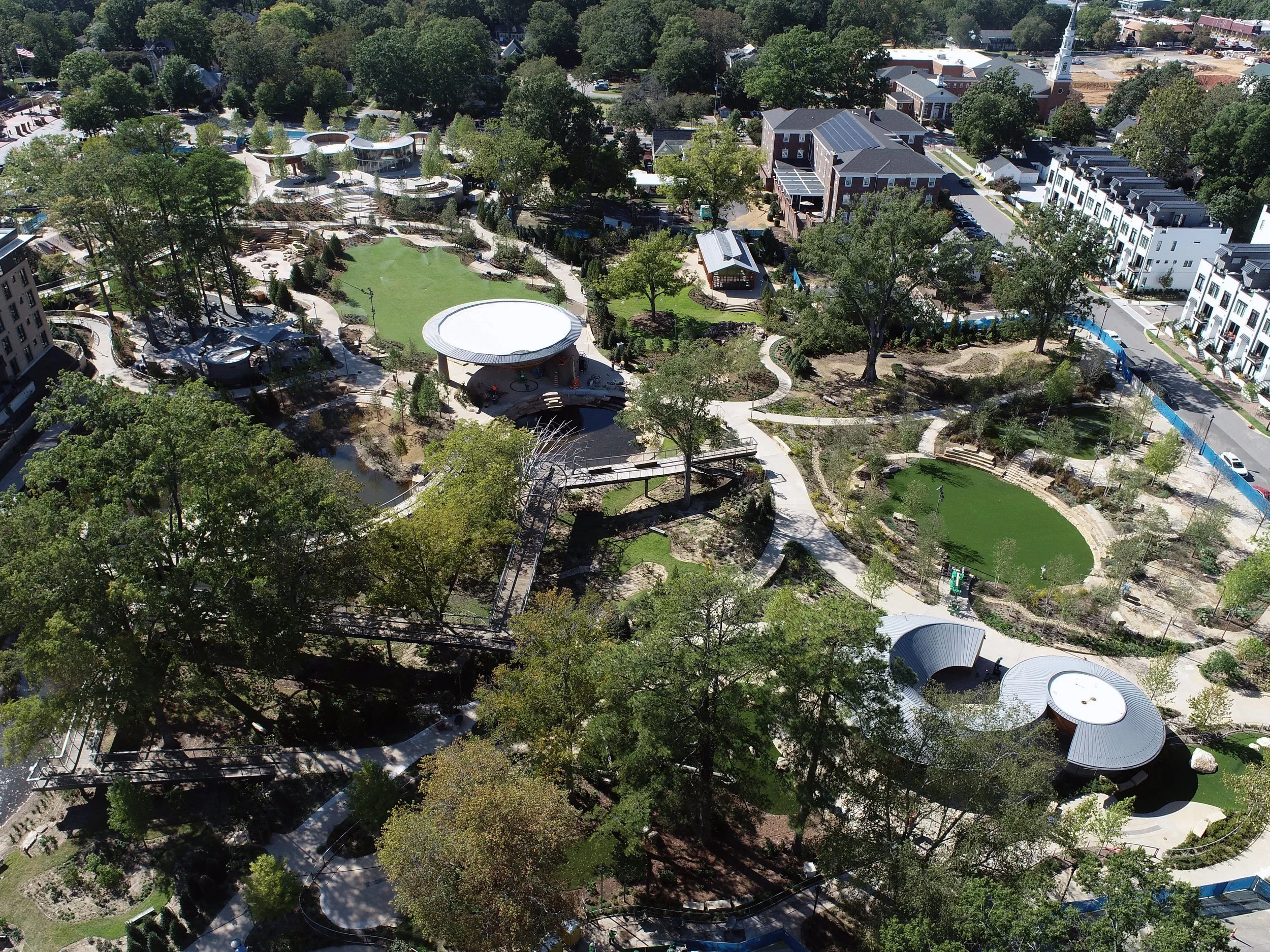
Downtown Cary Opening in November
News
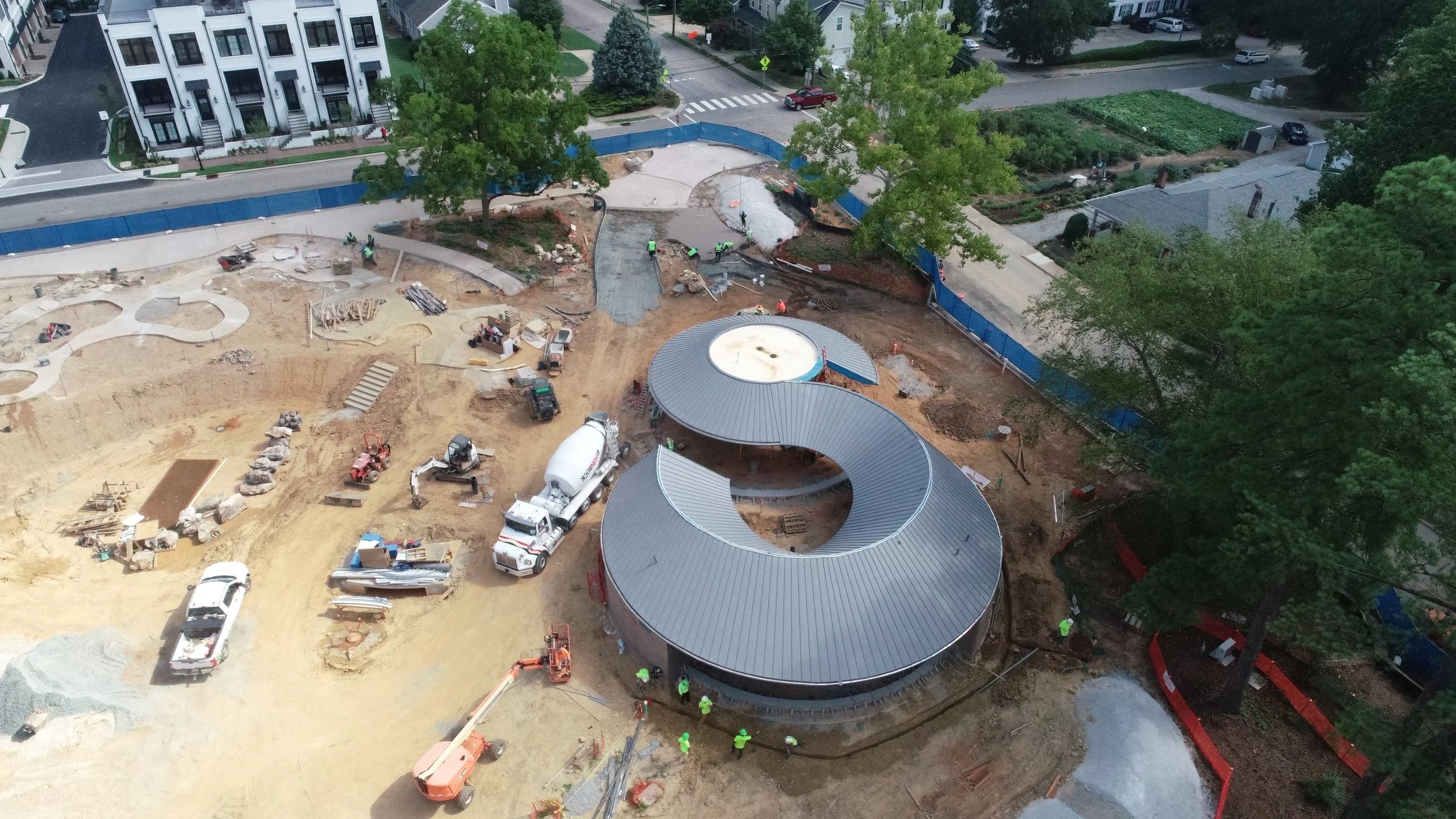
Downtown Cary Park Update, March 2023
News
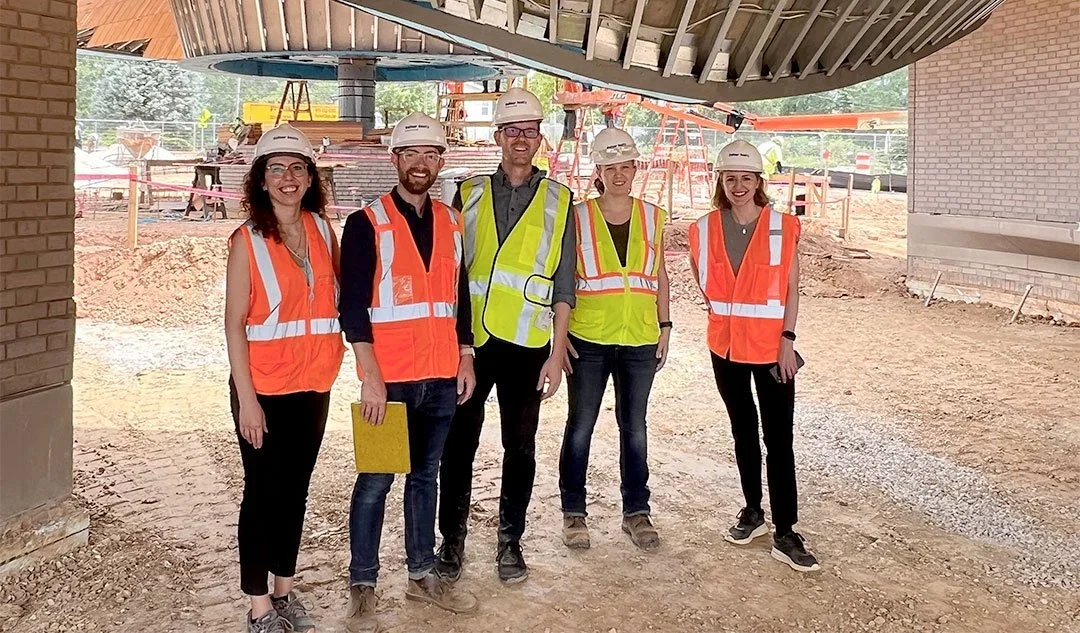
Downtown Cary Park Update, August 2022
News
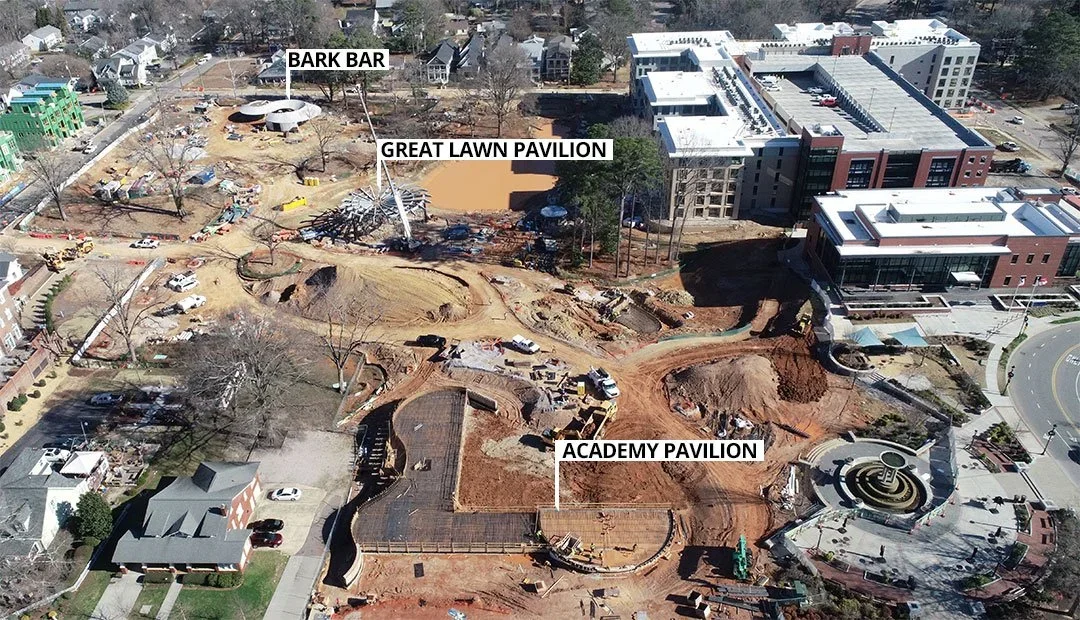
Downtown Cary Park Construction Update, January 2022
News

Downtown Cary Park Construction Underway
News
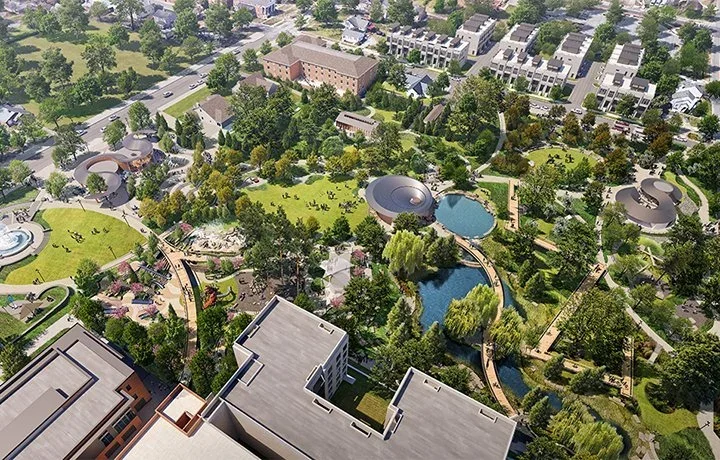
Downtown Cary Park Awarded in 2020 Architect's Newspaper Best of Design
News