Columbus Circle

Description
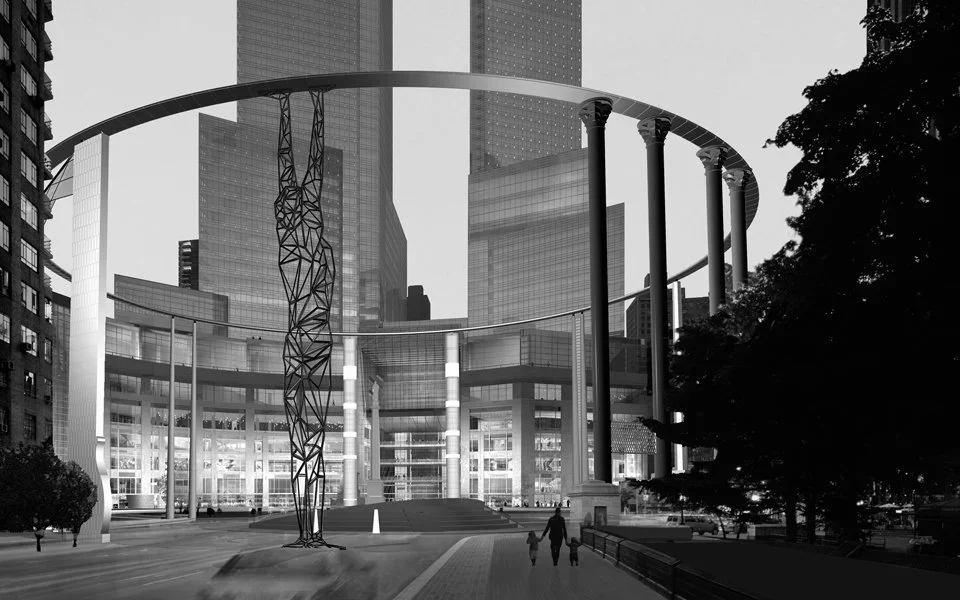
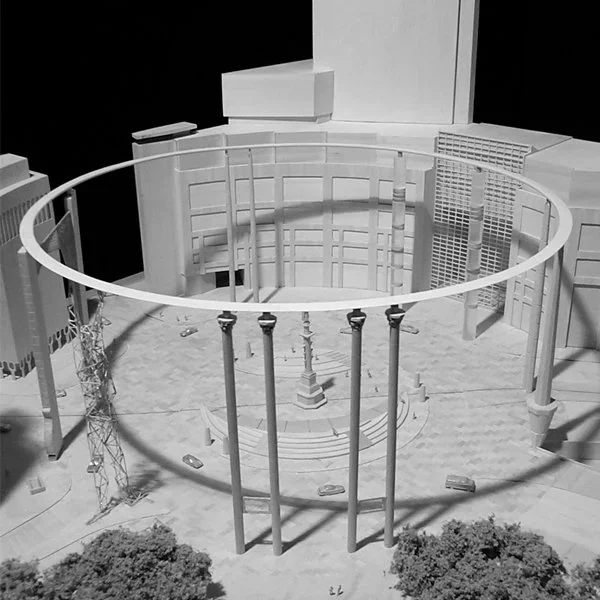
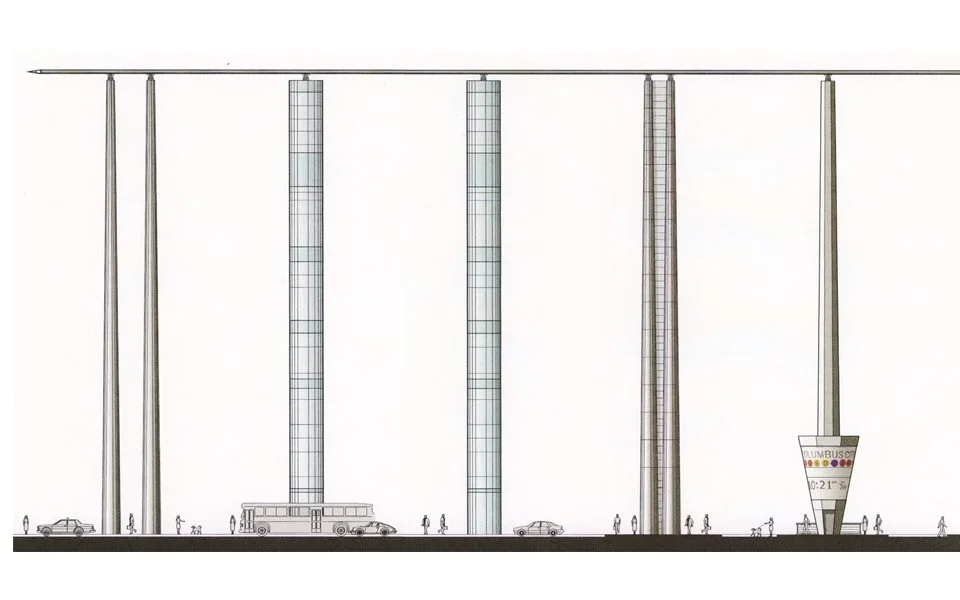
At its inception in 1857, Columbus Circle comprised a complex mix of urban pieces: the entrance to Central Park, two important monuments, major intersecting avenues, varied infrastructure, and a patchwork of architectures. The new Time-Warner Center reinforces part of the traffic circle’s geometry, but encloses only a third of the perimeter, leaving the remainder poorly defined. The proposal inscribes the circle’s ideal geometry in the sky, forming a ring of light that is three hundred forty feet in diameter.
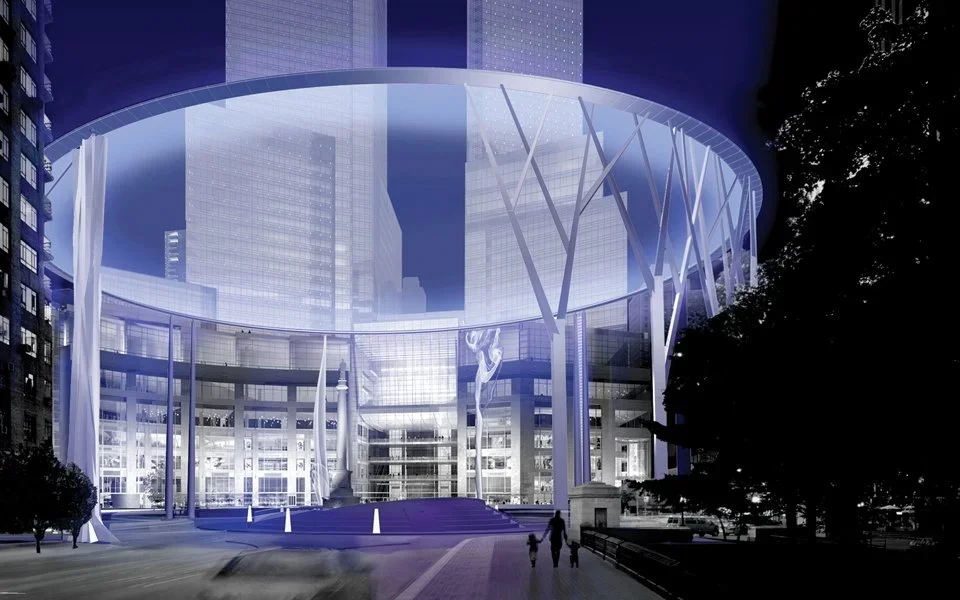
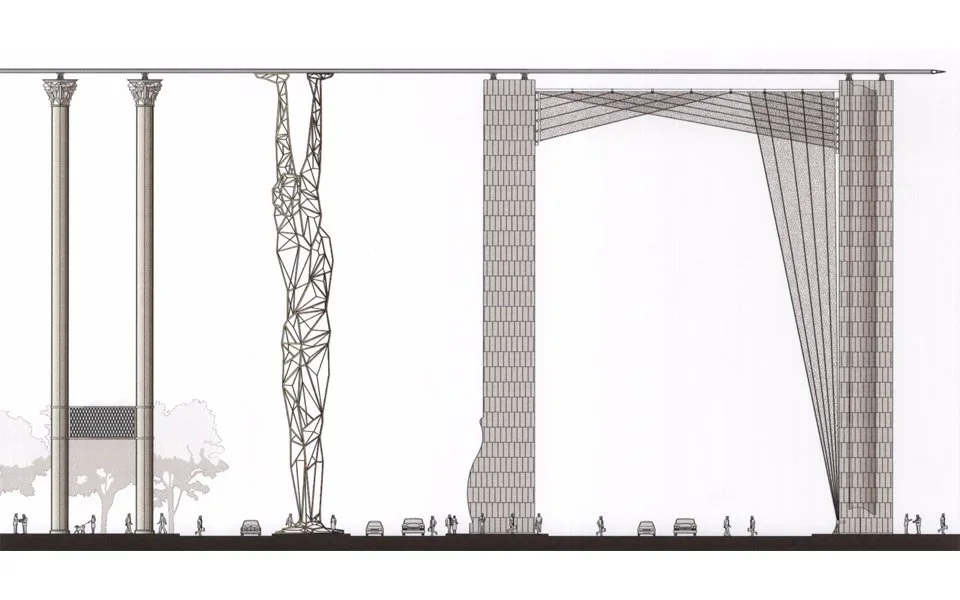
The circle rests on enormous columns, each measuring one hundred thirty six feet tall and representing a different city zone or subway stop, that support both the ring’s structures and its overall identity. On the ground plane, a trace of the circle underfoot completes the shape above while creating links to its surroundings. On the metropolitan scale, the circle establishes the classical geometry that was historically assigned to but never fully made physical at the site, thus organizing conflicting urban design moves.
By day, the ring is defined against a backdrop of sky and buildings. At night, it takes on a theatrical quality shaped by layers of light. From a distance, a band of light along the ring’s outer edge creates a luminous halo that reinforces its overall form across the city.
Details
Defining the Circle within the City
New York, New York
2001
Unbuilt
Drawings